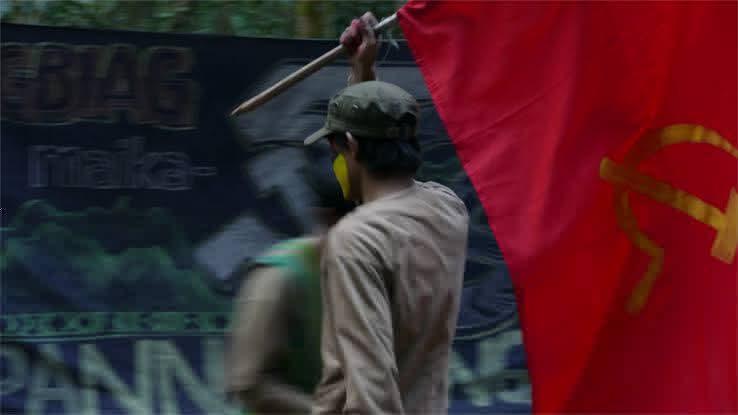
The emancipation of the working classes must be conquered by the working classes themselves.
International Workingmen’s Association (1864)
Preface
WE FIND ourselves a geography drenched in insurrection. For what it’s worth, this archipelago has not lacked revolt. From the highland redoubts of the Katipunan to the urban barricades of EDSA Tres, the historical record boasts a continuous, unbroken thread of resistance against the forces that be. And yet, curiously, the history of the Filipino working class is not the history of a class conquering its own emancipation, but the history of a class being conquered, mobilized, expended, and then discarded, by forces that never had, to begin with, any interest in its liberation, and only in its power—of which, youthful and unruly, it itself still remains largely unconscious of. But it is not that the workers failed to fight or refuse to; where they fight, whether of their own accord or compelled by events and forces often greater than their self-consciousness, they fight magnificently, with a ferocity that shames the comfortable. The tragedy is that every time they raised their heads, every time their fists clenched in the air and around the levers of production, punching up, a motley array of cretinous opportunists were there to whisper in their ear: not yet—now is not a good time, not for yourselves.
The Filipino working class, without exception like its brethren abroad, has been the infantry of every patriotic crusade, ever-reliably the voting bloc of whatever reformist coalition (whether “traditional” or “progressive” are meaningless to us) buys the headlines, and the human fuel of every imperialist bonfire. And at the end of each campaign, when the smoke clears and the new order settles into place, it finds itself exactly where it had begun: at the bottom of the heap of rubble, its labor still with a pricetag, with a body still expendable, and a children still hungry. The gilded chain around its ankle was forged not only by the capitalist—colonial or revolutionary—but by the very movements that swore they would set it free.
Class struggle is of course not a story of villains and heroes in the conventional sense. Many of the men and women who led these movements were sincere, courageous, and irreducibly self-sacrificing. But sincerity is not a substitute for clarity, and courage in the service of the patriotic breviary is but a more tragic form of defeat.
But we do not intend to indulge in the bitter pleasure of denunciation and thus exhortation. The workers have demonstrated, repeatedly, that the basic material world-historic antagonism between labor and capital exists here in the same form it exists everywhere. What has not existed—not for any sustained duration, in any case—is a working class that constituted itself politically as a class against capital on the terrain of its own general interests.
The structural limitations of 1896 reflected the actual class composition and organizational horizon of a period in which the Philippine proletariat was barely formed, concentrated in agricultural export production and artisanal manufacture, without the organizational density that modern capitalism would later generate. The absence of a proletarian program was therefore the direct expression of the stage of capitalist development in the archipelago. What 1896 invariably established, however, was the template of nationalist and democratic struggle, in which the common subjugation of all classes to foreign capital and political authority defines the primary antagonism, and the national coalition, including its bourgeois leadership, defines the subject of resistance, through which subsequent class struggles would be organized and neutralized.
Every “rupture” considered major since the fateful 1896 would be mediated through demagogic forms that would absorb proletarian antagonism, redirect it towards bourgeois political objectives, and discharge it back into the reproduction of the same social relations the class had risen against, but with ever more sophisticated forms. Ultimately what we are a witness to, those of us interested in history not so much for victories as for lessons, is a structural pattern—the continuous, derivative reproduction of counterrevolutionary forms at the increasing decisiveness of moments of proletarian upheaval. And to understand them, to see “our history” for what it is, and see it clearly, is to clear the ground, less so to build something new, but to reveal what has been hidden.
What is class independence?
Class independence is the organizational and political condition in which the working class pursues its general interests, as a class, without subordinating those interests and its general movement to the political objectives of any bourgeois fraction. It is a description of the necessary organizational form through which the class engages in political struggle. A class that is organizationally independent maintains its own political program, its own organizational structures, and its own criteria for what constitutes victory, determined by the general interests of the class as a whole.
The necessity of class independence is derived from the structural logic of capitalism and bourgeois politics. Capital reproduces itself through a set of institutional forms—the democratic state, the national form, the commodity, wage labor—through which class antagonism is managed and discharged. Any political coalition that includes a bourgeois fraction necessarily accepts, as the condition of that fraction’s participation, the preservation of the class relations that make it bourgeois. The bourgeoisie’s material interests are structurally incompatible with the abolition of wage labor, and any program broad enough to include them is therefore a program that stops short of that abolition.
The working class, organized within such a coalition, expends its energy in the service of objectives determined by its class enemy. And the result, confirmed across every major episode of the class struggle since 1848, is that the proletarian mass provides the spirit and flesh, and the progressive bourgeoisie gnaws and feasts upon its marrows.
Class independence is not a tactical preference but the unshakeable, invariable foundation of communist politics: without it, every political achievement of the working class in its course toward communism becomes available as an instrument for the reproduction of capital. When communists abandon the necessity of the struggle for class independence, they invariably abandon the working class itself in the dark.
And we thus look to its abandonment in the Philippine labor movement.
A fateful August
The Philippine revolution of 1896 originated in conditions that had been generating popular unrest for decades. The intensification of friar land monopoly in Luzon through the second half of the 19th century had dispossessed large numbers of peasant smallholders and created a class of landless agricultural laborers and share-tenants structurally dependent on the religious orders. In Manila and the secondary urban centers, artisanal production was being disrupted by the entry of cheaper imported manufactures through the commercial expansion that followed the opening of Philippine ports to world trade in 1834 and the intensification of commercial contact with European markets from the 1860s onward. The material conditions for large-scale popular revolt were present before the Katipunan was founded in 1892.
Andres Bonifacio, who would later become the Katipunan’s third Supremo, was a warehouse worker and minor commercial employee whose family background was in the Tondo artisanate. The organization he built drew its membership from the same strata: urban artisans, laborers, petty traders, and the rural poor in the provinces around Manila. Its politics were correspondingly radical in form—secret society organization, armed preparation for insurrection, rejection of the reformist assimilationist politics of the ilustrado Propaganda Movement whose leading figures sought integration into the Spanish political system rather than independence from it.
The class content of Bonifacio’s politics was organized entirely within the national-form. The Katipunan’s program was independence from Spain, the recovery of Katagalugan, the indigenous homeland, from colonial occupation. The social content of the independence demand was underspecified. Land redistribution, abolition of friar monopolies, and the reorganization of production on terms favorable to the laboring classes were implied in the social composition of the movement’s base but were not articulated as distinct political objectives separable from the national demand. This reflected the actual political horizon available within the conditions of late Spanish colonial Philippines in which the primary social antagonism experienced by the mass of the laboring population was colonial brutality, mediated through the friar orders and the colonial state, rather than the naked capital-labor relation which was still incomplete in its generalization.
When the revolution spread beyond Manila into the Tagalog provinces in August 1896 and into other regions, the ilustrado landowner class faced a decision. Many had been involved in the reformist Propaganda Movement and some had connections to the Katipunan, but their relationship to independence agitation had been cautious, oriented toward negotiation rather than insurrection. The outbreak of revolution presented them with an opportunity to displace Spanish colonial authority in their favor, combined with the risk that a mass insurrection led by urban workers and landless peasants might develop objectives incompatible with the preservation of their property.
Their entry into the revolution through the Cavite ilustrado network, and Emilio Aguinaldo’s emergence as a military leader with a provincial elite base, reorganized the political composition of the revolutionary coalition. At the Tejeros Convention in March 1897, the assembly convened to unify the revolutionary command elected Aguinaldo over Bonifacio as president of the new revolutionary government by a majority composition reflecting the ilustrado and provincial property-owning strata mobilized in Cavite rather than the urban poor of Manila who had built the Katipunan. Bonifacio disputed the legality of the election, was subsequently arrested, tried by a military court on charges of sedition and treason, and executed in May 1897.
The execution removed from the revolution its leading representative of the laboring classes, but this was a symptom rather than a cause. The deeper problem was that the revolution had no organizational or political form through which the specific interests of the Katipunan’s mass base could be asserted against those of the ilustrado leadership within the coalition. The national-form, or the demand for independence and the construction of a Filipino people united against Spanish colonialism, was what made the coalition possible, and it was also what made class differentiation within it politically sterile. To assert the distinct interests of the workers and peasants against the ilustrado landowners was effectively to divide the nation at the moment of its greatest test.
The Biak-na-Bato republic that followed Tejeros, and the Pact of Biak-na-Bato in December 1897 through which Aguinaldo accepted payment and exile in Hong Kong, completed the class character of the revolution’s political outcome. The ilustrado leadership had achieved what it wanted from the insurrection: the recognition as the legitimate political representative of a Filipino national community. And was prepared to negotiate with the colonial power on the basis of that recognition. The workers and peasants who had composed the Katipunan’s mass base returned to their conditions unchanged.
In every crisis is an opportunity: the resumption of the revolution in 1898, triggered by the Spanish-American War and the American navy’s decision to support Aguinaldo’s return from Hong Kong, would later develop to become both. The declaration of independence at Kawit on June 12, 1898, and the Malolos Congress that produced a Philippine constitution in January 1899, were the institutional expressions of a political project now clearly identified with the ilustrado political class and its vision of national sovereignty. The constitution’s property protections and its restriction of full political rights to the educated and propertied were the positive content of the independence that Bonifacio’s masses had fought for.
The Philippine-American War of 1899 to 1902 (protracted as a guerrilla conflict in some regions until approximately 1913) reorganized the social formation by incorporating the ilustrado bourgeoisie as a junior partner in a colonial administration whose basic economic logic was the integration of Philippine primary commodity production into American markets. The death toll from combat, disease, and famine generated by American military operations is estimated to range from 200,000 to over 600,000 Filipino deaths.
The American colonial government purchased approximately 164,000 hectares of friar estates under the 1904 Friar Lands Act for approximately $7.2 million, paid through bonds issued against Philippine government revenues. The land was resold through a mechanism that transferred the bulk of it to Filipino landlord families rather than to the peasants who worked it. The properly-semifeudal agrarian structure cohered from absentee-landlordism, share tenancy, and debt-bondage that had generated the revolution against Spain was reproduced under Filipino ownership and American capital.
The expansion of wage labor in this period was concentrated in export agriculture, where sugar was sourced from Negros and Pampanga, abaca from Bikol and Leyte, tobacco in Cagayan, and in the transport and utility infrastructure that American capital required in systematizing colonial-imperialist extraction. The sugar central system, which reorganized Negros Occidental’s sugar industry from the 1910s onward by concentrating milling in large industrial facilities, created a structural division between the plantation hacienda system controlled by Negrense ilustrado families and the centralized capitalist processing and financing operations, generating competition and the impetus to proletarianize the traditional feudal hacienda system.
Being itself “anti-imperialist” in the anti-European colonialist sense, American colonial policy’s approach to political participation was designed to incorporate the Filipino propertied elite into the apparatus of colonial administration through electoral competition for positions within the colonial state. William Taft’s policy of attracting ilustrado colaboración rested on the assumption that an elite with a stake in colonial institutions would be a more reliable instrument of social order than one excluded from them. The Federal Party, which Taft supported, attracted the most conservative ilustrado fraction. The Partido Nacionalista, founded by Sergio Osmeña and Manuel Quezon in 1907 as the dominant party of the Philippine Assembly, competed within colonial institutions while maintaining independence agitation as its primary political claim.
Early labor unrest was real but organizationally weak and politically incoherent. Union Obrera Democratica, organized, among others, by Isabelo de los Reyes, a journalist who had been exposed to socialist and anarchist ideas during imprisonment in Spain, mounted significant strike actions in Manila printing and service trades before its organizational collapse following internal divisions and state repression. The Congreso Obrero de Filipinas that Crisanto Evangelista would lead as president sought legislative remedies for labor grievances through the Philippine Assembly. Labor’s demands would be advanced through the same colonial representative institutions that the Partido Nacionalista dominated. This was the mechanism through which the colonial democratic program absorbed labor politics.
Proletarians and Communists
The formation of the labor movement in the 1910s and 1920s coincided with the period of rapid expansion of Philippine export-capitalism under American colonial auspices. Sugar production in Negros expanded dramatically through this period, driven by preferential access to the American market established by the 1909 Payne-Aldrich Tariff Act, which extended significant tariff preferences to Philippine goods entering American markets, locking Philippine agricultural production into dependency on American consumption while disadvantaging the development of domestic manufacturing. Manila’s urban population grew substantially through this period, generating a concentrated urban working class in port, transport, and manufacturing sectors.
The strike wave of the 1920s demonstrated real organizational capacity in the emerging class. But the labor movement of this period could not generate a political program adequate to the class’ situation, because its political horizon was bounded on one side by the reformism of the Congreso Obrero and on the other by petty-bourgeois socialist currents that shared its nationalist assumptions. Crisanto Evangelista, who went on to found Partido Komunista ng Pilipinas (PKP) in 1930, built his career within the labor movement through militant industrial organizing, but would also remain, throughout the 1920s, oriented toward national independence as the precondition for class liberation.
The Colorum uprisings of the 1920s and early 1930s introduced a struggle rooted in the immediate material experience of agrarian dispossession. The most documented incident was the Tayug uprising of January 1931 in Pangasinan, led by Pedro Calosa, a former agricultural worker in Hawaii who had been deported after organizing a multiracial labor strike—in which approximately seventy armed peasants attacked the municipal hall, burned land documents, and briefly occupied the town constabulary barracks before government reinforcements suppressed the revolt. The Colorum movement was geographically dispersed, with active currents documented in Surigao, Negros, Leyte, Samar, and Panay as well as Luzon. The colonial state’s suppression of these uprisings, tagged as the work of bandits and religious fanatics, removed a potentially significant element of peasant radicalism from the political field at precisely the moment when the organized labor movement was developing its first explicitly class-struggle oriented currents. The two streams of urban labor radicalism and rural agrarian rebellion would not develop any lasting or significant organizational connection in this period.
The agrarian-socialist current that developed around Pedro Abad Santos in Pampanga in the 1920s and 1930s came to develop a distinctly petty-bourgeois peasant politics in this period. Abad Santos organized sugar workers and tenant farmers in Central Luzon through a socialist party that framed agrarian conflict in class terms though obscured by his insistence on legality, and made the expropriation of the hacienda system rather than national independence its primary objective. His peasant unions achieved significant organizational density in Pampanga, and his willingness to frame the struggle as one against Filipino as well as American capital distinguished his politics from the nationalist mainstream.
But the Socialist Party of the Philippines operated entirely within the legal framework of the Commonwealth. Abad Santos sought legislative remedies for tenancy grievances, ran for office, and organized through labor arbitration rather than through any conception of class struggle that exceeded what the colonial democratic system could accommodate. The socialist framing was reformist in method, working through legitimate channels toward redistributive adjustments within the existing property order rather than toward its overthrow, later even arguing against independence from the US, recommending better wealth distribution among classes.
When 1938 brought Abad Santos’ Partido Sosyalista into a merger with Evangelista’s Partido Komunista, the terms of the merger would heavily lean towards the nationalist democratic framework’s dominance: the new unified Communist Party of the Philippines’ program was organized around the anti-imperialist united front, and the class struggle politics of Abad Santos’ Central Luzon organizing was subordinated to the popular front coalition requirements of the Muscovite International.
The Partido Komunista ng Pilipinas, founded in 1930 through the merger of labor and socialist organizations under Evangelista’s leadership, entered Philippine politics at a moment when the global communist movement was reorganizing around the Comintern’s “Third Period” class-against-class line. The PKP’s initial 1930 program called for immediate independence, the abolition of landlordism, and the establishment of a worker-peasant government, and it rejected participation in the Commonwealth political structures being negotiated between the Nacionalista leadership and the American Congress. This formal radicalism however quickly gave in after the Party was accepted into the Comintern, where its 1935 pivot to the Popular Front strategy replaced class-against-class with the broadest possible anti-fascist coalition against the Axis powers. For the young PKP, the pivot meant the abandonment of the worker-peasant government slogan and its replacement with an anti-imperialist united front that included the Commonwealth government and the “progressive” fraction of the Filipino bourgeoisie. The 1934 Tydings-McDuffie Act, which the PKP had earlier denounced as a neo-colonial arrangement, was subsequently accepted as a step toward independence.
The stages theory that governed the PKP’s politics corresponded to real features of Philippine capitalism at the time—the dominance of agrarian relations in the economy, persistence of debt-bondage and share-tenancy alongside wage labor in the sugar and rice sectors, and the overwhelming concentration of manufacturing capital in American and Spanish-Filipino hands. These topological features made it easy to argue that the “primary contradiction” was between the Filipino nation and US imperialism, and this was plausible enough, by experience, to a laboring class whose most immediate exploitation was administered via the extractive colonial relationship and semifeudal agrarian structure it had generated. The stages theory worked because it corresponded, in a distorted, non-Marxist form, to real empirical features of Philippine social formation.
This would result in the identification of colonial underdevelopment with “semi-feudalism” and the conclusion that the bourgeois-democratic revolution was the necessary first stage of the communist program. This identification systematically occluded the capitalist character of the exploitation that Filipino workers and peasants actually experienced. The hacienda system was, of course, not “feudal”; it was a specific form of agrarian capitalism integrated into the world market through export commodity production. The friar land settlement had dissolved the colonial land monopoly on terms favorable to the landlord class rather than the peasantry, but the result was capitalist landlordism under Filipino ownership, not the survival of pre-capitalist relations.
World-fascism and democracy
The Japanese occupation of the Philippines from January 1942 produced conditions in which the organizational networks the PKP had built in Central Luzon could be converted into an armed peasant movement. The Hukbo ng Bayan Laban sa Hapon (People’s Army Against the Japanese), abbreviated to Hukbalahap, or simply the Huk, established in March 1942 under PKP leadership, drew on the peasant union networks of Pampanga, Bulacan, Nueva Ecija, and Tarlac and on genuine anger among the Central Luzon peasantry against landlords perceived as collaborating with the Japanese military administration. By 1944 the Huk controlled significant territory across Central Luzon and fielded a substantial armed force.
The political character of the Huk rebellion was determined by the PKP’s national democratic line, which framed the Huk as the military arm of the anti-imperialist united front rather than as an instrument of agrarian class revolution. The PKP coordinated with American military operations, refused to use the conditions of Japanese occupation to redistribute land in areas it controlled, and subordinated the agrarian program to the requirements of the broadest possible anti-Japanese coalition, which included, on the American side, the landlord class and the Commonwealth government-in-exile.
When American forces returned in 1944–1945, the Huk demobilized in line with the PKP’s assessment that the postwar Commonwealth political order provided a legitimate terrain for democratic politics. The Democratic Alliance, a coalition that included PKP-aligned candidates, won congressional seats in the 1946 elections. The House of Representatives, controlled by Manuel Roxas’ Liberal Party, subsequently refused to seat six elected Democratic Alliance congressmen from Central Luzon on the grounds of fraud and violence in their districts where Huk military strength made Roxas’ own electoral operations difficult. The PKP and the Huk were declared illegal organizations in 1948.
The second armed insurrection that followed reached its military peak in 1950–1951, when the PKP leadership assessed conditions as approaching a revolutionary situation. This was an assessment that would prove to be catastrophically wrong. The movement was without significant organizational presence outside Central Luzon, its urban working-class base was thin, and it had no mechanism for connecting agrarian rebellion to a national proletarian politics. Ramon Magsaysay’s counter-insurgency campaign, conducted with American advisory and material support, combined military pressure with land resettlement programs in Mindanao that offered Huk fighters an individual economic exit from the rebellion. The movement was effectively suppressed by 1954.
The Third Philippine Republic, established with formal independence on July 4, 1946, institutionalized the class structure that American colonial policy had consolidated. The Bell Trade Act, signed simultaneously with the independence proclamation, extended American preferential tariff access to Philippine markets, prohibited restrictions on American capital investment, and pegged the peso to the dollar at a fixed rate. These arrangements were the conditions for formal political independence, accepted by a Filipino ruling class whose economic interests required continued American commercial and investment relationships.
The political structure of the Republic institutionalized a two-party system in which the Liberal Party and the Nacionalista Party alternated in power through elections characterized by fraud, violence, and the organization of mass votes through patron-client networks controlled by landlord families at the municipal and provincial levels. The distinction between the two parties was factional rather than strictly ideological or programmatic: both represented the same bourgeois class-coalition of landlords, compradors, and American-oriented commercial capital, competing primarily over access to state resources rather than over alternative economic or social programs.
The labor movement’s integration into the postwar state proceeded through the mechanisms of industrial relations legislation modeled on American labor law, which established formal procedures for collective bargaining and dispute resolution administered through state labor institutions. Trade union federations built in this period, most prominently the Congress of Labor Organizations, were developed with substantial American assistance through the American Institute for Free Labor Development, an AFL-CIO organization that received American government funding and was explicitly designed to build anti-communist labor organizations in countries where communist-aligned unions had significant presence.
A labor movement that organized around wage and benefit improvements within the existing property framework, that sought legislative remedies through the institutions of the bourgeois state, and that accepted the terrain of democratic competition as the field of political action was performing the management of class conflict within limits compatible with capital accumulation. The political subordination of labor to the democratic ideology was the structural outcome of the national-democratic political formation that had organized labor politics from the beginning.
The red sun rises in the South
Now the proletariat could no longer combine its interests with the interests of other classes hostile to it; let the bourgeoisie bear the responsibility for the national humiliation—the task of the proletariat was to fight for the socialist emancipation of labour from the yoke of the bourgeoisie.
V.I. Lenin
Before Sison, among others, founded the Communist Party of the Philippines, he was a member of the Executive Committee of the old Partido Komunista ng Pilipinas (PKP-1930), operating within its front organization the Lapiang Manggagawa (LM)—a workers’ electoral party founded on February 3, 1963 through a merger of the major trade union federations, the first organization of its kind in Philippine history. Sison served as the LM’s Vice President for Propaganda; Ignacio Lacsina, another PKP Executive Committee member, held the position of Secretary General. The LM’s founding represented a genuine, if fragile, moment in which the Philippine labor movement was attempting to constitute itself as an independent political force. Within seven months, Sison and Lacsina dissolved it.
On August 6, 1963, as President Diosdado Macapagal concluded the Manila Summit with Indonesia’s Sukarno, a diplomatic moment the PKP read as evidence of Macapagal’s “progressive national-bourgeois” credentials, Sison and Lacsina would sign a coalition agreement merging the Lapiang Manggagawa with Macapagal’s ruling Liberal Party. At the moment of the merger, arrastre workers—stevedores and longshoremen—were in the midst of a major strike against the Macapagal government over the port authority. The PKP leadership used the independent workers’ party to tie the labor movement to a government that its own workers were striking against, precisely in the name of the National-Democratic program that identified Macapagal as a progressive anti-imperialist ally. In 1965, Sison reversed course again, orchestrating the LM’s, MASAKA’s, and the newly formed Kabataang Makabayan’s (KM; Nationalist Youth) support for Ferdinand Marcos against Macapagal’s Liberal Party, on the grounds that Marcos represented a more reliable section of the “national bourgeoisie”. Lapiang Manggagawa had been twice instrumentalized for elite political competition within a single electoral cycle—no less by the official “Communists” themselves.
Sison’s expulsion from the PKP in 1967, a consequence of the factional pressures in Southeast Asia of the Sino-Soviet split, produced the political conditions for the CPP’s founding. The new party was established on December 26, 1968, the date chosen to mark Mao’s birthday, following what Sison called the First Great Rectification Movement: a historic campaign to reorganize the Philippine communist movement around Maoist principles and away from what he characterized as the PKP’s Soviet revisionism. The theoretical document Philippine Society and Revolution, written under Sison’s pen-name Amado Guerrero, provided the founding analysis of the new Maoist Party that the Philippines was a “semi-colonial, semi-feudal” society, the primary contradictions were between the Filipino nation and US imperialism and between the peasantry and the landlord class, and thus the revolutionary task was a National-Democratic revolution whose socialist stage was deferred. It was, in the Maoist party’s words, a revolution “of a new type”. The New People’s Army was re-established on March 29, 1969, in the mountains of Isabela, with Bernabe Buscayno—“Kumander Dante”—commanding an initial force of roughly sixty fighters and an antiquated stock of small arms.
Capitalism is reconstructed in thought by a specific set of categorical images that approximately capture what it is empirically in the Maoist subjectivity: industry, manufactory, economic independence, urbanity, developmental equalization of town and country, and so on. The semi-feudal characterization, whatever its theoretical defects, corresponded to features of the Philippine agrarian economy that were genuinely experienced as backward (or “pre-capitalist” as the socialist intelligentsia would then call it) by the peasants who bore them: share-tenancy arrangements in which a substantial portion of the harvest went to the landlord, perpetual indebtedness through usurious advance lending, the use of private armed retainers by landlords to enforce tenancy agreements, and the effective absence of state legal protection for tenants in most rural jurisdictions. These features were, of course, not feudal in any precise sense, since they were articulated through and determined by the capitalist world market. But they produced exploitation in forms that the categories of landlordism and “feudal backwardness” captured more vividly than the approximate categories of agrarian capitalism. The Maoist framework worked organizationally because it corresponded, in this distorted, empiricist way, to how the class actually experienced its conditions, not because it accurately identified their immanent, structural character in line with Marxism.
The CPP’s strategy for the labor movement was determined from the beginning by the National-Democratic program. Where the PKP had merged the LM with a ruling party, the CPP sought to build labor organizations that would function as the workers’ front of the National-Democratic united front—militant in form, nationalist and democratic in content. The Kilusang Mayo Uno (KMU; May First Movement), founded on May 1, 1980, became the primary vehicle through which the CPP organized the urban working class. At its peak in the mid-1980s the KMU claimed a membership of over five-hundred-thousand workers across manufacturing, transport, export processing, and service sectors, and it organized some of the most significant industrial strikes of the Marcos period. But the KMU’s militancy was consistently directed by the political objectives of the National-Democratic program. Strikes were framed as patriotic anti-imperialist struggles; union demands were calibrated to the requirements of building the broadest possible anti-Marcos front; and independent class politics, those demands that would exceed the National-Democratic horizon, or that implicated Filipino as well as American capital, were systematically marginalized within CPP-aligned labor formations. The KMU was not a deformation of a healthy labor politics that the CPP captured and redirected, but was built from the beginning precisely as an instrument of the National-Democratic movement, and its organizational achievements in building union density were real precisely because the workers who filled it were fighting real exploitation. That the political orientation of those struggles was determined by the Maoist party’s National-Democratic program rather than by any independent working-class political horizon would doom it to becoming a petty-bourgeois mimicry of independent communist politics.
The Plaza Miranda bombing of August 21, 1971, in which three grenades were thrown onto the stage of a Liberal Party campaign rally at Plaza Miranda in Quiapo—with two exploding, killing nine people and wounding somewhere between sixty and one-hundred—condensed in a single event the logic through which the CPP related the working class to Philippine political life. The bombing destroyed the Liberal Party’s campaign rally, maiming senators and party officials; it was attributed publicly by the CPP to Marcos, a claim that provided the basis for mass anti-Marcos mobilization and that Marcos exploited in turn to suspend the writ of habeas corpus. Within the CPP, responsibility was another matter. Multiple former CPP officials subsequently attributed the attack to Sison’s direct order, including Victor Corpus, later to defect to the military in 1971 and write ‘Silent War’, and party-founding member Ruben Guevarra in later accounts. Historian Joseph Scalice’s dissertation, drawing on extensive archival research and interviews, presents the most systematic scholarly reconstruction of the evidence for CPP responsibility, arguing that Sison, with accelerationist tendencies, ordered the bombing to radicalize the student movement and accelerate the revolutionary situation by provoking a state repression that would delegitimize the Liberal Party and parliamentary politics simultaneously. Sison has denied responsibility throughout; the CPP has never officially confirmed it; and the question remains contested, with some historians continuing to implicate Marcos. What is not in dispute is the political consequence: the bombing accelerated the political polarization that Marcos exploited to declare martial law thirteen months later
Marcos declared martial law on September 21, 1972, officially citing the communist threat, but responding primarily to the decomposition of bourgeois political competition and the need to consolidate state power around his own bourgeois faction. For the CPP, martial law produced a decisive expansion of its organizational reach. The National Democratic Front, formally established in 1973 as the CPP’s broad political coalition, provided an umbrella under which a wide range of social forces, from workers, to peasants, students, urban poor, progressive church organizations, and sections of the professional middle class, could be organized around the National-Democratic program. The NPA expanded from roughly sixty fighters in 1969 to an estimated twenty-five-thousand by the mid-1980s, spreading from its original base in Isabela through Mindanao, Eastern Visayas, Bikol, the Cagayan Valley, and Southern Tagalog. CPP party membership was claimed at approximately thirty-five thousand at the organization’s peak. Real wages for industrial workers declined sharply as the Marcos government suppressed independent union activity and imposed wage controls as part of its export-oriented development strategy, and the CPP’s capacity to organize around the resulting class grievances within the National-Democratic program drove a substantial part of this expansion.
The internal consequences of this growth were catastrophic. By the early 1980s, a combination of military infiltration, overextension, and deepening factional conflict within regional party structures produced the conditions for a series of internal purge campaigns that would devastate the movement. The first significant campaign, Oplan Kadena de Amor, was conducted in Southern Tagalog in 1980. What followed was far worse. Beginning in 1985, the CPP’s Mindanao Commission (MINDACOM), responding to a series of military arrests of party leaders in Davao and Cagayan de Oro that generated suspicion of widespread military infiltration, launched Kampanyang AHOS: the campaign against Ahente (agents), Oportunista (opportunists), and Sukab (traitors). Suspected “Deep Penetration Agents” (DPAs) were lured to meetings, arrested within NPA camps, stripped of any due process on the grounds that procedural rights were a “bourgeois luxury” incompatible with guerrilla conditions, subjected to torture that reliably produced confessions (real or otherwise couldn’t have mattered less) and the denunciation of comrades, and executed. By the CPP’s own subsequent accounting, documented in its 1992 internal review “General Review of Important Events and Decisions (1980-1991)” and in statements published on the NDF’s own website, Kampanyang AHOS resulted in the prejudgment, torture, and murder of approximately 950 cadres, Red fighters, and mass activists in Mindanao. A parallel campaign, Operasyon Takip Silim, was simultaneously conducted in southern Quezon province, killing approximately half of sixty people arrested, the majority of them civilians and peasants rather than military agents. Oplan Missing Link followed in Southern Tagalog in 1988, and the nationwide Operasyon Olympia ran from 1988 to 1989. Across all campaigns, estimates of total casualties range from approximately two-thousand to three-thousand, with military intelligence figures, notwithstanding their own evidentiary problems, putting the total substantially higher. By 1986, CPP membership in the Mindanao region had fallen from nine-thousand to three-thousand; the mass base had contracted by fifty percent; and the NPA’s fifteen companies and thirty platoons in the region had been reduced to two companies and seventeen platoons.
The CPP Politburo’s 1987 internal assessment declared Kampanyang AHOS “quite successful, although there were excesses.” The admission that there had been “widespread enemy infiltration”, even in the post-hoc, self-exculpatory form of the Maoist party’s internal review, fueled renewed fears of infiltration in other regions and organs, producing the conditions for the subsequent campaigns. The concept of “due process” had been explicitly rejected within the party as bourgeois; the survival of the party was held to take precedence over the rights of individual members; and the result was a self-consuming paranoiac logic in which the party’s own cadre became the primary victims of the revolutionary security apparatus. The March 1988 arrests in Metro Manila of then-head of the NPA General Command Romulo Kintanar, alleged CPP secretary-general Rafael Baylosis, and alleges Executive Committee member Benjamin de Vera deepened and extended the reach of the paranoia.
The CPP’s organizational crisis through the late 1980s coincided with the EDSA conjuncture. The party’s decision to boycott the February 1986 snap election, though theoretically consistent with its rejection of parliamentary politics, but arguably catastrophically misjudged as a tactical assessment of the conjuncture as others would reflect on, left it organizationally sidelined at the moment of mass political mobilization, and then without a political line adequate to the democratic restoration that followed. The CPP’s own subsequent internal accounting identified the boycott as among its gravest errors.
Tragedies and farces
Benigno Aquino’s assassination at Manila International Airport on August 21, 1983 triggered a mass political response demonstrating the breadth of anti-Marcos sentiment, including the business community, the Catholic hierarchy under Cardinal Jaime Sin, significant sections of the armed forces, the professional middle class, and the organized labor movement. The political demand to depose Marcos and to restore constitutional democracy that organized this coalition was a demand for the recovery of bourgeois civility, not for social revolution.
The February 1986 EDSA uprising was triggered by the defection of then-Defense Secretary Juan Ponce Enrile and then-Armed Forces Vice Chief of Staff Fidel Ramos, who withdrew their support from Marcos and barricaded themselves in Camp Aguinaldo, prompting Cardinal Sin’s call for civilians to surround the camps and the subsequent mass civilian mobilization. The Aquino government’s Comprehensive Agrarian Reform Program, enacted in June 1988, was designed with land conversion provisions, landowner retention limits, and stock distribution options that its actual redistributive effect was minimal. The Mendiola massacre of January 22, 1987, in which government security forces killed thirteen farmers marching toward Malacañang Palace demanding genuine land reform, demonstrated within a year of EDSA the barbarism of democratic civility.
The CPP’s internal reckoning in the aftermath of the EDSA boycott was prolonged and brutal. The Maoist party’s 1992 internal document “General Review of Important Events and Decisions (1980-1991)” attempted to account for the organizational disasters of the previous decade within the framework of the National-Democratic line, attributing the failures to subjective errors and opportunist deviations rather than to the structural logic of the political program itself. Sison, in exile in the Netherlands since 1987, responded to the mounting internal pressure by launching from abroad what he called the Second Great Rectification Movement. His document “Reaffirm Our Basic Principles and Rectify Errors” (1992) identified the source of the party’s difficulties as deviation from the Maoist line—specifically, with the influence of “urban insurrectionism” and other ideological corruptions introduced by party cadre who had developed doubts about the protracted people’s war strategy in the context of the Soviet collapse and the changing global political landscape. The SGRM’s prescription was a return to orthodox Maoism and the intensification of the armed struggle in the countryside. It functioned as a settling of internal accounts between Sison’s faction and those who had developed programmatic alternatives to the National-Democratic line, and it produced the 1992-1993 organizational split, the most significant rupture in the Philippine left since the CPP’s own founding, between the Reaffirmists, who accepted Sison’s analysis and his continued leadership from Utrecht, and the Rejectionists, who repudiated it.
The Reaffirmist CPP shrank but consolidated, reducing the autonomy of regional organs that the 1980s had allowed to develop in ways that Sison’s central leadership could not control, and reasserting the organizational discipline of the National-Democratic line under Sison’s remote authority. The Rejectionist tendency fragmented along multiple axes: Filemon Lagman’s group seized control of the KMU Manila-Rizal and would later reorganize it as Bukluran ng Manggagawang Pilipino (BMP), attempting to reorient towards an orthodox Marxism-Leninism defined against Maoism, as other formations moved increasingly towards social-democratic politics, with Akbayan (Citizens’ Action Party) emerging as the most electorally significant result, contesting the 1998 elections and winning party-list representation. The repeal of the Anti-Subversion Act in 1992 which had criminalized Communist Party membership since 1957 opened legal space for former underground cadre to participate openly in electoral politics, and the 1987 constitution’s party-list system provided an institutional mechanism through which former underground organizations could convert their organizational capacity into parliamentary presence.
The Reaffirmist CPP’s engagement with electoral politics through the party-list system produced an apparent paradox: a party that maintained the theoretical position that parliamentary democracy was a bourgeois mystification used the parliamentary mechanism to build a stable above-ground organizational presence. The resolution of the paradox was consistent with the National-Democratic program: participation in elections was a tactical instrument for building the legal mass movement, not a programmatic commitment to parliamentary politics. In practice, the ND-aligned Makabayan bloc became a stable parliamentary presence through the 2000s and 2010s, consistently winning between five and eight House seats per election, functioning as a left-opposition bloc within the legislature whose political work was organized around the National-Democratic program.
The Duterte presidency (2016–2022) produced the starkest illustration of the National-Democratic program’s structural incapacity for independent class politics. The CPP and its affiliated mass organizations provided significant support to Duterte’s 2016 presidential campaign, drawn by his professed anti-imperialism, his anti-American rhetoric, his promises to resume peace talks, and his campaign pledges to end labor contractualization. The assessment that Duterte represented a progressive section of the “national bourgeoisie”, like Manny Villar in 2009, capable of advancing national-democratic tasks, was the same theoretical operation that the old PKP had performed on Macapagal in 1963 and on Marcos in 1965. After his election, Duterte appointed three NDF-nominated figures to his cabinet: Rafael Mariano (Secretary of the Department of Agrarian Reform), Judy Taguiwalo (Secretary of the Department of Social Welfare and Development), and Liza Maza (lead convenor of the National Anti-Poverty Commission). Peace negotiations were conducted in Oslo and Rome through three rounds in late 2016 and early 2017, with both sides exchanging initial drafts of a Comprehensive Agreement on Social and Economic Reforms.
The alliance would collapse in 2017. NPA attacks on military and police units during periods of declared ceasefire provided Duterte with a pretext; the Commission on Appointments, dominated by traditional politicians hostile to the leftist cabinet members, rejected the confirmations of Taguiwalo and Mariano; Maza resigned. Duterte declared the CPP a terrorist organization, terminated the peace talks definitively, and established the National Task Force to End Local Communist Armed Conflict (NTF-ELCAC) in December of 2018, providing the institutional framework for an intensified counter-insurgency campaign and, subsequently, for the systematic red-tagging of legal progressive organizations. The CPP spent the remainder of the Duterte period oscillating between renewed armed operations, attempts to restore the peace talks, and public ambivalence about whether Duterte was a potential ally or an outright fascist. The ambivalence was made material in a SONA demonstration in 2017 at which the CPP-aligned Bayan produced a two-sided effigy of Duterte, one side depicting him as a militant revolutionary with raised fist, the other as Hitler.
What the Duterte episode demonstrates with particular clarity is that the National-Democratic program cannot produce an independent working-class politics because it has been structurally designed to prevent one. The repeated cycle of identifying a “progressive” bourgeois fraction, coalition-building with it, subordinating working-class demands to the coalition’s requirements, and ultimate betrayal when the bourgeois fraction’s class interests reassert themselves—these are not tactical errors correctable through better judgment. It is the operational logic of a program that identifies the bourgeois tasks as prior to and independent of the working class’ general interests against capital will always, in practice, calibrate those tasks to what the most progressive bourgeois fraction in any given conjuncture can accept as conditions of alliance.
Lessons of the Counterrevolution
Like all other parties, the proletariat learns first of all from the consequences of its mistakes, and nobody can spare them these mistakes altogether.
Engels to Trier.
Our brief survey above yields determinate conclusions backed by the iron pattern of outcomes which the historical record has hammered out again and again.
No interclassist political coalition organized around a national demand has ever advanced the specific—that is, general—class interests of the Philippine working class. From the convention at Tejeros to Duterte’s Malacañang, in each case, the coalition’s political objectives were determined by its bourgeois fraction, and the proletarian mass that provided the bodies and the blood was herded into a settlement that left it neutered, munching on dead grass at best—with a hole in the head at worst.
The democratic ritual has been the primary form through which class conflict has been absorbed, managed, and discharged. Democracy converts the raw antagonism of class into tepid factional squabbles inside institutions whose rules take the legitimacy of the existing property order as sacred and non-negotiable. Democracy transforms the life-or-death struggle between labor and capital into a regulated haggling session with outcomes pre-bounded by the profitability constraints capital imposes on the firm. Democracy launders class demands into polite pleas for legislation within a political system owned and operated by the representatives of landowning and commercial capital. The proletarian is invited into the cage to be declawed and domesticated.
The stages theory is the theoretical form through which the National-Democratic program’s subordination of proletarian politics to bourgeois objectives is legitimized. The claim that a democratic revolution must precede a socialist one already accepts the bourgeoisie’s definition of what political questions are primary, and ensures that proletarian organizations will calibrate their programs to what the most progressive fraction of the bourgeoisie can accept as terms of alliance.
The national form is not the only mechanism of proletarian subordination in Philippine capitalism, and in the current imperialist period the primary mechanisms of class fragmentation are anchored to the movements of international capital: geographic dispersion of the class through labor export, fragmentation of employment through contractualization, the spatial isolation of export workers in economic zones, and so forth. Nationalism in this period accompanies and reinforces these structural mechanisms, and a communist analysis of the present conjuncture must engage with the structural reconfigurations of the class directly rather than treating nationalism as the master explanation for their political consequences.
The requirements that this history imposes are categorical.
On the other hand, these prohibitions have no model in Philippine history. Every significant left formation in the archipelago’s history has violated at least one of them systematically. The argument for their necessity does not rest on the comfort of historical precedent; it rests on the communist tradition’s analysis of capital as a global social relation, a hydra whose reproduction through multiple institutional forms demands a political response that refuses to accept any of those forms as a legitimate container for class politics.
In the current conjuncture, with the class fragmented and scattered, no revolutionary upsurge on the horizon, and existing left formations locked into the iron cage of petty-bourgeois revolutionism, the primary work of a communist current is theoretical and propagandistic. It is the systematic demolition of the national-democratic rot from the standpoint of the communist program; the historical demonstration, wielded like a weapon, that the rot has reached the very core of proletarian struggle in every single conjuncture, eating itself from the inside. And it is the careful, unyielding building of an organizational nucleus capable of sustaining that critique under the immense ideological pressure that will be brought to bear by all the forces invested in the old illusions.
The Filipino proletariat must cease to appear, politically, as a convenient constituency within the national coalition, as a mass base for national-democratic busywork, as a heroic labor reserve whose sacrifices are forever channeled into someone else’s development project. It must emerge, finally, as a class whose general interests are antagonistic to the reproduction of capital in all its forms, including the national form through which capital has organized its dominance for more than a century. This history is irreversible, and communists must make sure the working class does not start from zero.
Ang katubusan ng manggagawa…
Thus is the prescient necessity to begin the labor of labor, to restore to the proletariat what is rightfully the proletarian’s, and to bring him to the level of his class’ historic mission of concluding the exploitation of man by man, by installing, with force and whatever means necessary, the free association of human beings on earth. The working class needs no national heroes, expects no Christ, and does away with the lords petty and great: it will sooner or later rid itself of the leech infestation of nationalism and nationalists—left and right—in the same manner.
We return, then, to the image with which we began: an archipelago saturated with the memory of struggle, emptied of its own possibility. Over a century of sacrifice and blood shed has yielded little more than an inheritance of accumulated defeats. Each generation of Filipino militants has been handed a script for a tragedy.
Only through the patient, determined, and thankless work of developing the independent organization of the class, armed with the invariant principles that have been clarified through the acid bath of historical defeat, can this cycle be broken. Only a communist politics that is resolutely anti-national, anti-democratic, and uncompromising in its defense of class autonomy can finally take root in the soil of the archipelago. The century of defeats must be overcome.
The proletariat must, before anything else, win this right to the restoration of its world-historic path with its own hands. The way forward is the same road as it has always been.
Bibliography
Abinales, Patricio. “Kahos Revisited: The Mindanao Commission and Its Narrative of a Tragedy.” In Rosanne Rutten, ed., Brokering a Revolution: Cadres in a Philippine Insurgency. Quezon City: Ateneo de Manila University Press, 2008.
Abinales, Patricio. “When the Revolution Devours Its Children Before Victory: Operasyon Kampanyang Ahos and the Tragedy of Mindanao Communism.” In Patricio Abinales, ed., The Revolution Falters: The Left in Philippine Politics After 1986. Ithaca: Cornell University Southeast Asia Program, 1996.
Agoncillo, Teodoro A. History of the Filipino People. 8th ed.
Agoncillo, Teodoro A. The Revolt of the Masses: The Story of Bonifacio and the Katipunan. Quezon City: University of the Philippines Press, 1956.
Bangko Sentral ng Pilipinas. Annual Remittance Report. Cited in Philippine Star, “Remittances from overseas Filipinos hit all-time high in 2018,” February 16, 2019.
Bonner, Raymond. Waltzing with a Dictator.
BusinessWorld Online. August 10, 2017.
Communist Party of the Philippines. “General Review of Important Events and Decisions (1980–1991).” Internal document, 1992.
Constantino, Renato. The Philippines: A Past Revisited. Quezon City: Tala Publishing Services, 1975.
Corpus, Victor. Silent War. 1989.
Cullinane, Michael. Ilustrado Politics: Filipino Elite Responses to American Rule, 1898–1908. Quezon City: Ateneo de Manila University Press, 2003.
Curato, Nicole, ed. A Duterte Reader: Critical Essays on Rodrigo Duterte’s Early Presidency. Quezon City: Ateneo de Manila University Press, 2017.
De Dios, Emmanuel, ed. An Analysis of the Philippine Economic Crisis.
Friar Lands Act (Act No. 1120). April 26, 1904.
GMA News. “Duterte and the Left: A Broken Relationship.” December 27, 2020.
Guerrero, Milagros C. “The Colorum Uprisings: 1924–1931.” Asian Studies 5, no. 1 (1967).
Guerrero, Milagros. “Understanding Philippine Revolutionary Mentality.” Philippine Studies 29 (1981).
The Guidon. “Left Behind.” September 29, 2017.
Human Rights Watch. “License to Kill”: Philippine Police Killings in Duterte’s Drug War. New York: HRW, 2017.
Hutchcroft, Paul. Booty Capitalism: The Politics of Banking in the Philippines. Ithaca: Cornell University Press, 1998.
Ileto, Reynaldo. Pasyon and Revolution.
International Communist Current. “A History of Trade Unionism in the Philippines.”
International Communist Party. Milan Theses. 1952.
International Crisis Group. “The Communist Insurgency in the Philippines: Tactics and Talks.” Brussels: ICG, 2011.
Kerkvliet, Benedict. The Huk Rebellion: A Study of Peasant Revolt in the Philippines. Berkeley: University of California Press, 1977.
Lachica, Eduardo. Huk: Philippine Agrarian Society in Revolt. Manila: Solidaridad Publishing House, 1971.
Labor Code of the Philippines (Presidential Decree 442) and subsequent amendments.
Lande, Carl. Leaders, Factions, and Parties: The Structure of Philippine Politics. New Haven: Yale Southeast Asia Studies, 1964.
Lansdale, Edward. In the Midst of Wars: An American’s Mission to Southeast Asia. New York: Harper and Row, 1972.
Larkin, John. Sugar and the Origins of Modern Philippine Society. Berkeley: University of California Press, 1993.
Legarda, Benito. After the Galleons: Foreign Trade, Economic Change and Entrepreneurship in the Nineteenth-Century Philippines. Quezon City: Ateneo de Manila University Press, 1999.
Linn, Brian McAllister. The Philippine War, 1899–1902. Lawrence: University Press of Kansas, 2000.
Mariano, Rafael, Judy Taguiwalo, and Liza Maza. Joint Statement. February 7, 2017.
May, Glenn Anthony. “Putting the Propaganda of the Revolt: The Problem of Teodoro Agoncillo’s ‘The Revolt of the Masses.’” Journal of Southeast Asian Studies 17, no. 2 (1986).
May, Glenn Anthony. Social Engineering in the Philippines: The Aims, Execution, and Impact of American Colonial Policy, 1900–1913. Westport: Greenwood Press, 1980.
McCoy, Alfred, ed., An Anarchy of Families.
McCoy, Alfred. Policing America’s Empire: The United States, the Philippines, and the Rise of the Surveillance State. Madison: University of Wisconsin Press, 2009.
McCoy, Alfred, and Ed de Jesus, eds. Philippine Social History: Global Trade and Local Transformations. Honolulu: University of Hawaii Press, 1982.
Miller, Stuart Creighton. “Benevolent Assimilation”: The American Conquest of the Philippines, 1899–1903. New Haven: Yale University Press, 1982.
Mojares, Resil. Brains of the Nation: Pedro Paterno, T.H. Pardo de Tavera, Isabelo de los Reyes and the Production of Modern Knowledge. Quezon City: Ateneo de Manila University Press, 2006.
Ofreneo, Rene. “Growth and Employment in De-industrializing Philippines.” Journal of the Asia Pacific Economy 20, no. 1 (2015).
Owen, Norman. “Philippine Economic Development and American Policy: A Reassessment.” In Alfred McCoy and Ed de Jesus, eds., Philippine Social History: Global Trade and Local Transformations. Honolulu: University of Hawaii Press, 1982.
Peace Advocates for Truth and Healing (PATH). Memorial Statement. 2003.
Philippine Daily Inquirer. “Victims of Communist Party Purge Seek Justice.” Republished at marxists.org and libcom.org.
Philippine Statistics Authority. Survey on Overseas Filipinos.
Pomeroy, William. The Forest: A Personal Record of the Huk Guerrilla Struggle in the Philippines. New York: International Publishers, 1963.
Pomeroy, William J. The Philippines: Colonialism, Collaboration, and Resistance! New York: International Publishers, 1992.
Putzel, James. A Captive Land.
Quimpo, Nathan. Contested Democracy and the Left in the Philippines after Marcos. New Haven: Yale Southeast Asia Studies, 2008.
Quitoriano, Eddie L. Deeper Ground, Darker Shadows: The Making of a Mindanao Rebel. Madison: University of Wisconsin Press, 2025.
Richardson, Jim, and Fast, Jonathan. Roots of Dependency: Political and Economic Revolution in 19th Century Philippines. 1979.
Rodriguez, Robyn Magalit. Migrants for Export: How the Philippine State Brokers Labor to the World. Minneapolis: University of Minnesota Press, 2010.
Rutten, Rosanne, ed. Brokering a Revolution: Cadres in a Philippine Insurgency. Quezon City: Ateneo de Manila University Press, 2008.
Saulo, Alfredo. Communism in the Philippines: An Introduction. Quezon City: Ateneo de Manila University Press, 1990.
Scalice, Joseph. “55 years since the founding of Kabataang Makabayan (KM).” josephscalice.com. November 29, 2019.
Scalice, Joseph. “A deliberately forgotten battle: The Lapiang Manggagawa and the Manila Port Strike of 1963.” Journal of Southeast Asian Studies 53, no. 1–2 (2022): 226–251.
Scalice, Joseph. “Crisis of Revolutionary Leadership: Martial Law and the Communist Parties of the Philippines, 1957–1974.” PhD dissertation, University of California, Berkeley, 2017.
Scalice, Joseph. “Embracing a Fascist: How the Communist Party of the Philippines Facilitated and Endorsed Duterte’s Rise to Power.” Panel presentation at Ateneo de Manila University and Portsmouth University, April 22, 2021. Summarized in World Socialist Web Site, May 4, 2021.
Scalice, Joseph. “First as Tragedy, Second as Farce: Marcos, Duterte and the Communist Parties of the Philippines.” Public lecture, Nanyang Technological University, Singapore, August 26, 2019. Transcript published at World Socialist Web Site, September 1, 2020.
Schumacher, John, S.J. The Propaganda Movement, 1880–1895. Manila: Solidaridad, 1973.
Sison, Jose Maria [Amado Guerrero]. Philippine Society and Revolution. Manila: Pulang Tala Publications, 1971.
Sturtevant, David. Popular Uprisings in the Philippines.
Taruc, Luis. Born of the People. New York: International Publishers, 1953.
Washington Post. Investigation on the Plaza Miranda bombing. 1989.